

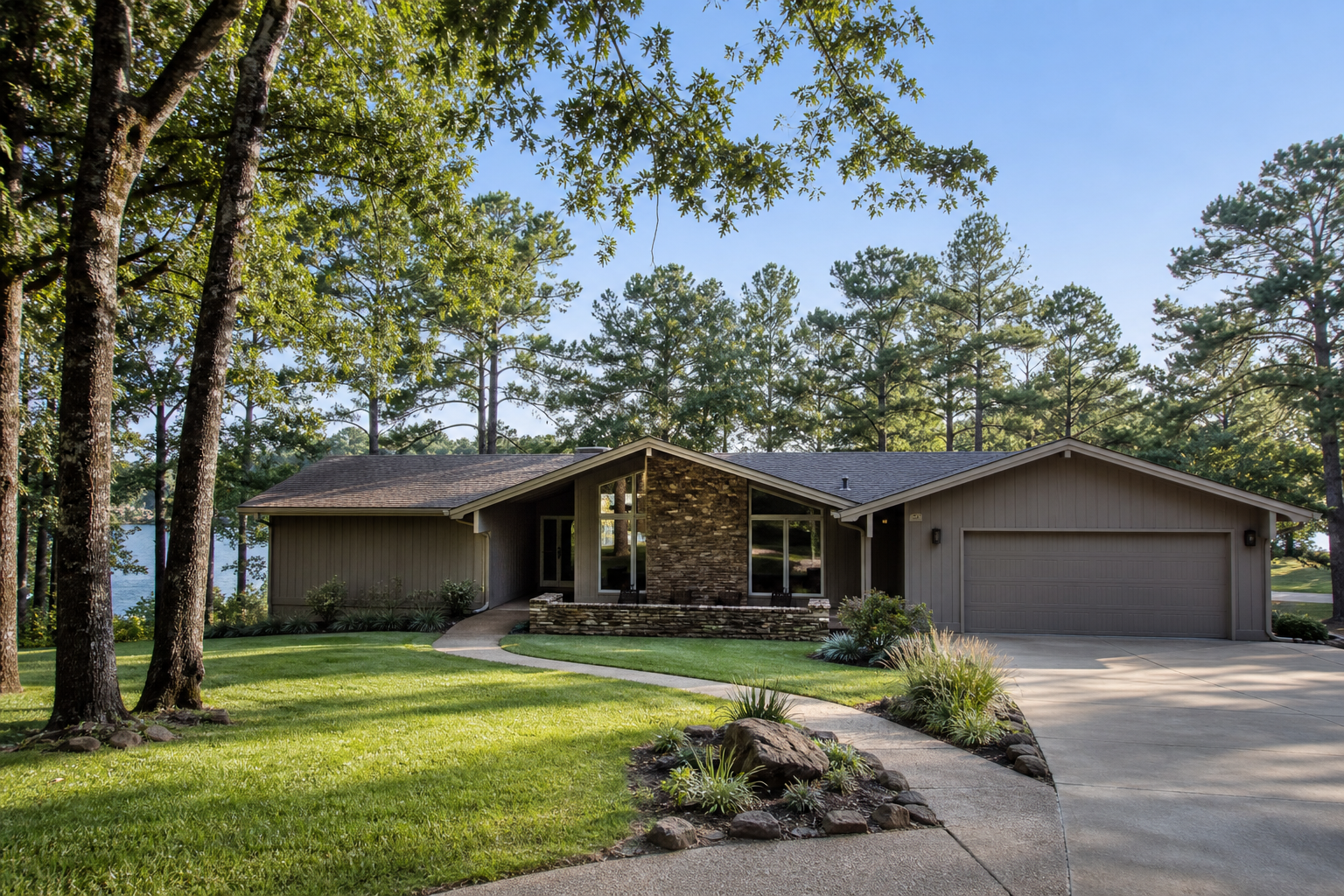
Selling a house in Greater East Texas means accounting for title company fees, prorated property taxes (paid in arrears under Texas law), recording fees, tax certificates, and any negotiated concessions. Texas has no real estate transfer tax, which simplifies the picture, but Smith County’s stacked tax rates make proration a significant line item at closing.
What does it really cost to sell a house in Greater East Texas?
Selling a house in Greater East Texas involves several cost categories that show up on your closing statement: title company fees (settlement, tax certificates, recording), prorated property taxes paid in arrears, any negotiated seller concessions, and broker compensation. Texas has no state or local real estate transfer tax, which removes one cost common in other states, but Smith County’s combined tax rate means the proration credit you give the buyer at closing can be a meaningful number depending on your home’s assessed value and your closing date.
Key Takeaways
- Texas has no real estate transfer tax, so sellers in Greater East Texas do not pay a documentary transfer or excise tax at closing.
- Property taxes in Texas are paid in arrears, which means you will credit the buyer at closing for the portion of the year you owned the home.
- The most recent published combined tax rate for a typical Tyler address in Smith County (county + city + Tyler ISD + Tyler Junior College District) is approximately $1.9206 per $100 of taxable value, per the Texas Property Tax Almanac.
- Standard seller-side title company line items in a Greater East Texas closing include a settlement fee, tax certificates (one per tax account), and recording fees for lien releases.
- Broker compensation is fully negotiable and set in your listing agreement, there is no standard or fixed rate, and any offer of compensation to a buyer’s agent is optional and separately negotiated.
What seller costs actually appear on a Texas closing statement?
Here’s what I walk every seller through before we talk price or timing: your net proceeds are not just sale price minus what you owe on the mortgage. There are several cost categories between that top-line number and the wire that hits your account. In Greater East Texas, those categories break down into a few distinct buckets.
Title company fees: settlement, tax certificates, and recording
In Texas, closings are handled by a title company, not a closing attorney. The title company manages the escrow of funds, prepares the closing documents, and disburses proceeds. On the seller side, you’ll typically see three line items from the title company itself.
The settlement fee (sometimes called an escrow or closing fee) is the title company’s charge for managing the transaction. The tax certificate fee is charged per tax account and covers the cost of pulling an official certificate from the county tax assessor-collector confirming what is owed, whether there are delinquencies, and any special assessments. According to ListingSpark’s Texas seller closing cost breakdown, the tax certificate is a standard seller-side line item in Texas residential closings, and the title company uses it to calculate the proration credit accurately.
Recording fees cover the cost of recording lien releases and other documents with the county clerk. In Smith County, the per-page recording structure can affect the exact amount, which is another reason to review your closing disclosure line by line rather than assume a flat number.
Owner’s title insurance: who pays in East Texas?
Texas does not mandate who pays for the owner’s title insurance policy by law. It is a matter of custom and negotiation. In many East Texas transactions, the seller customarily covers the owner’s title insurance premium, but that is a negotiated term in your contract, not a legal requirement. If you’re selling in a market where buyers have more leverage, this is one of the line items worth discussing with your agent before you list.
The lender’s title insurance policy (which protects the buyer’s lender, not the buyer) is typically paid by the buyer as part of their own closing costs.
Broker compensation
Broker fees are fully negotiable and are not set by any law, MLS rule, or industry standard. There is no “typical” or “customary” rate I can publish here, and I won’t. What I will tell you is that your listing agreement spells out the fee you agree to pay your listing broker, and any compensation offered to a buyer’s agent is a separate, optional decision you make as a seller. Those two things are not automatically bundled, and offers of compensation are no longer shared on the MLS. If you want to understand what commission would look like for your specific situation, that’s a conversation to have directly with me before you sign anything.
How do Texas property taxes affect your net at closing?
This is the line item that surprises more East Texas sellers than any other, and it’s driven entirely by two facts specific to Texas: taxes are paid in arrears, and Smith County’s combined rate is not small.
Texas taxes-in-arrears and the proration credit
In Texas, property taxes for a given year are billed and collected the following year. That means when you sell, you haven’t yet paid the taxes that are accruing for the current year. At closing, the title company calculates the number of days you owned the home in the current tax year and credits that amount to the buyer, because the buyer will eventually pay the full year’s bill. That credit comes out of your proceeds.
The Smith County Appraisal District’s 2025 Annual Report is the ground-truth source for assessed values and the breakdown of taxing entities, and it’s where title companies and agents pull authoritative data for proration calculations. If you want to double-check your own assessment or understand why your proration looks the way it does, SmithCAD is the right place to start.
What Smith County’s combined rate means for sellers
The rate that matters for your proration is not just the county rate. It is the sum of every taxing entity that has jurisdiction over your property. For a typical Tyler address in Smith County, the most recent combined rate reported by the Texas Property Tax Almanac stacks up like this:
| Taxing Entity | Rate per $100 Taxable Value (Most Recent Available) |
|---|---|
| Smith County (M&O + I&S) | $0.364231 |
| City of Tyler | $0.236452 |
| Tyler ISD + Tyler Junior College District (combined with above) | Included in combined rate below |
| Combined rate (Smith County + City of Tyler + Tyler ISD + TJC District) | $1.9206 |
Sources: Smith County Truth in Taxation Summary; City of Tyler Tax Information; Texas Property Tax Almanac. These are the most recent published rates as of September 9, 2026 and are subject to change in future tax years.
The practical point: the higher your home’s taxable value and the later in the year you close, the larger the proration credit you’ll owe the buyer. A home with a significant taxable value closing in October or November carries a much bigger proration than the same home closing in January. Closing date is not just a logistical detail in Greater East Texas. It is a financial variable.
One nuance that matters here: homestead vs. non-homestead properties. If your home carries a homestead exemption, your assessed taxable value is lower than it would be without one, which directly affects the proration amount. The Smith County Appraisal District publishes the exemption details. This is worth confirming before you estimate your net, because the difference can be real money depending on your home’s market value.
What Texas sellers do NOT pay: the transfer tax advantage
One of the genuine advantages of selling in Texas is that the state imposes no real estate transfer tax and no documentary stamp tax. In states like Florida, New York, or California, sellers pay a percentage of the sale price to the state or county just for the act of transferring title. That line item does not exist on a Texas closing statement. According to the National Association of Realtors, transfer taxes in other states can add thousands to a seller’s cost. In East Texas, that is simply not a factor.
What this means practically: your closing cost conversation in Greater East Texas centers on title fees, proration, recording, and any negotiated concessions. There is no statutory transfer levy to plan around.
Which costs are fixed and which are negotiable?
This is one of the most useful questions a seller can ask, and the honest answer is that it depends on the line item. Recording fees are set by the county clerk and are not negotiable. The tax certificate fee is a pass-through cost. But items like who pays the owner’s title insurance premium, whether the seller offers any concessions, and how broker compensation is structured are all negotiable terms in your contract.
I always recommend that sellers ask their agent to walk through a sample closing disclosure before listing, not after going under contract. Knowing the categories and which ones have room to move is how you negotiate from a position of knowledge, not surprise. If you’re also thinking about what buyers are facing on their side of the table, my post on buying a home in East Texas and crafting the right offer covers how buyer costs factor into offer strategy.
And if you’re weighing whether now is the right time to list, the current market context for sellers in Mineola or how Tyler’s commercial growth is affecting home sellers in 2026 are worth reading alongside this post.
Your specific net proceeds depend on your home’s taxable value, your homestead status, your closing date, your assessed payoff balance, and the terms you negotiate. That’s not a number I can give you on a blog. It is exactly the kind of number I build out for every seller I work with before we talk strategy.
If you’ve found this helpful, I’d encourage you to read what other East Texas sellers have said about working through this process. You can find my reviews on Google, Zillow, and Realtor.com.
Frequently Asked Questions
Who pays for the owner’s title policy when I sell a house in East Texas?
In Greater East Texas, it is common for the seller to pay the owner’s title insurance premium, but this is a negotiated term in the contract, not a legal requirement under Texas law. The custom can shift depending on local market conditions, the buyer’s offer terms, and what you agree to in your purchase contract. Ask your agent which direction the market is trending before you assume it falls on you.
How are property taxes split at closing in Smith County, Texas?
Texas property taxes are paid in arrears, so at closing the title company calculates the number of days you owned the home in the current tax year and credits that proportional amount to the buyer. The buyer will eventually pay the full year’s bill, so you are reimbursing them for your share at the closing table. The proration is based on your property’s taxable value and the combined rate for all taxing entities that apply to your address, which for a typical Tyler property in Smith County includes the county, city, school district, and junior college district.
What is a property tax certificate and why does my East Texas title company need one?
A property tax certificate is an official document pulled from the county tax assessor-collector that confirms your property’s current tax status, including amounts owed, any delinquencies, penalties, or special assessments. According to ListingSpark’s Texas closing cost guide, the title company orders this certificate to calculate the correct proration credit and to ensure the title can transfer free of tax liens. The fee for the certificate is typically a seller-side closing cost line item.
Why don’t I see a transfer tax on my Texas closing statement?
Texas does not impose a state or local real estate transfer tax on residential sales, which means that line item simply does not exist on a Texas closing disclosure. This is a genuine advantage over many other states where sellers pay a percentage of the sale price to the state or county at closing. Your Texas closing costs focus on title fees, proration, recording, and negotiated terms rather than a statutory transfer levy.
How do Smith County property tax rates affect my net when I sell?
The combined 2026 tax rate for a typical Tyler address in Smith County is approximately $1.9206 per $100 of taxable value when you stack the county, city, school district, and junior college district rates, per the Texas Property Tax Almanac. The higher your home’s taxable assessed value and the later in the calendar year you close, the larger the proration credit you’ll give the buyer. If your home has a homestead exemption, your taxable value is lower, which reduces the proration. The Smith County Appraisal District is the authoritative source for your specific assessed value and exemption status.
Ready to see what your net actually looks like?
Understanding the categories is the first step. Getting your actual number requires running the math against your specific property, your payoff, your closing date, and your negotiated terms. That’s what I do in every seller consultation before we talk price or strategy.
Reach out at beccawilliamsrealtor@gmail.com and let’s build out your picture before you list.
Equal Housing Opportunity. Rebecca Williams is a Texas Licensed Sales Agent regulated by the Texas Real Estate Commission (TREC). This article is general information only and does not constitute legal, tax, or financial advice. Confirm your specific closing costs, tax proration, and net proceeds with your title company, tax advisor, or lender.